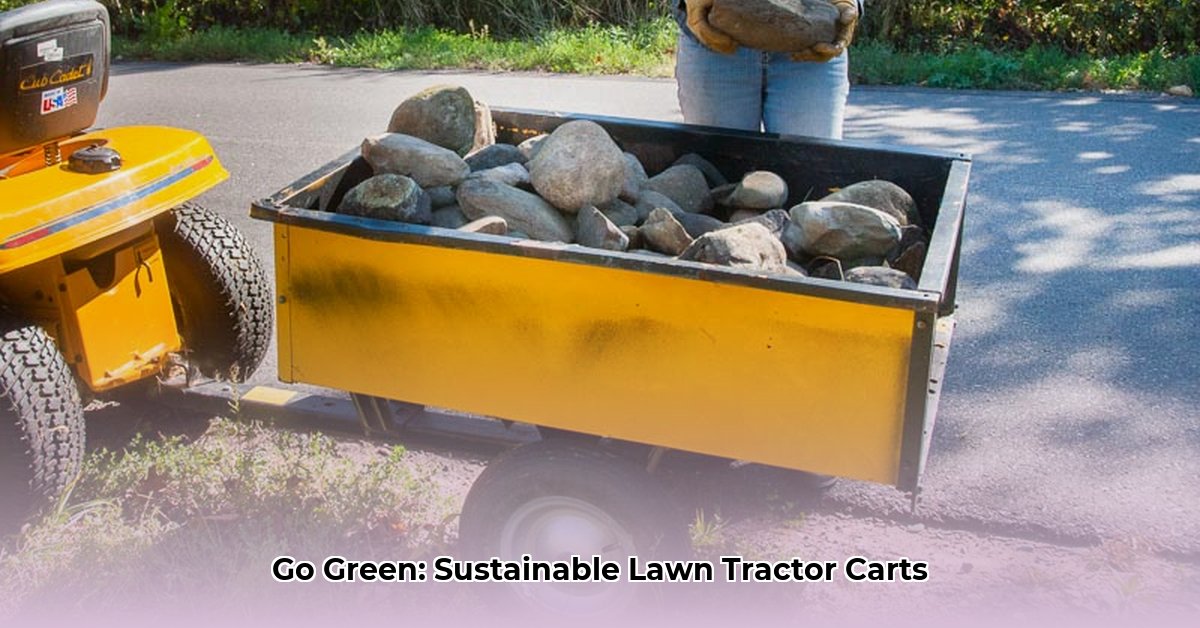
Choosing a lawn tractor cart isn't just about hauling; it's a crucial decision impacting your farm's sustainability. This guide empowers you to select and utilize eco-friendly carts, minimizing your environmental footprint. For more detailed information on sustainable cart options, check out this helpful resource: Learn More.
Understanding Sustainable Lawn Tractor Carts
A truly sustainable lawn tractor cart considers its entire lifecycle: from material sourcing to eventual disposal. This means prioritizing recycled or sustainably harvested materials, robust construction for longevity, and easy recyclability at the end of its life. Did you know that a single, long-lasting cart can prevent multiple replacements, significantly reducing landfill waste and resource consumption?
Key Factors When Choosing a Sustainable Lawn Tractor Cart
Several critical factors guide your decision:
Material Composition: Opt for carts made from recycled plastics (giving those plastics a new life), sustainably harvested wood (ensuring responsible forest management), or powder-coated steel (using less paint and reducing harmful toxins). Avoid virgin plastics and excessive paint which significantly increase the environmental impact.
Durability and Longevity: A durable cart will serve you for years, reducing the need for frequent replacements. Look for robust construction, strong welds, and heavy-duty wheels capable of handling various terrains. A well-maintained cart can easily last a decade or more, significantly reducing your overall environmental impact.
Recyclability: Investigate the cart's end-of-life options. Can it be easily disassembled and recycled? Many manufacturers now offer recycling programs or provide information on responsible disposal; prioritizing manufacturers with explicit recycling plans ensures responsible waste management, greatly reducing your farm's ecological footprint.
Manufacturer's Sustainability Initiatives: Research companies committed to sustainability. Look for transparency regarding their manufacturing processes, materials sourcing, and waste reduction efforts. Certifications such as B Corp indicate a higher standard of environmental and social responsibility. Supporting these businesses strengthens the demand for sustainable practices within the industry.
Review of Sustainable Cart Options
While comprehensive sustainability information from manufacturers remains limited, we can compare models from retailers like Tractor Supply Co. and Home Depot, focusing on the key factors outlined above:
(Note: This section would include images and detailed specifications of several cart models from different manufacturers, comparing their features based on the sustainability criteria discussed. Due to the limitations of this response format, it's not possible to provide specific model information and images.)
Consider these aspects when reviewing specific models:
- Material Breakdown: The percentage of recycled content, the sourcing of wood (if applicable), and whether the paint used is low-VOC (volatile organic compound) should all be considered.
- Weight Capacity and Dimensions: Choose a cart suited to your needs; avoid oversizing, but ensure it's appropriately sized for your typical loads to prevent strain and premature wear.
- Wheel Quality and Replaceability: Puncture-resistant tires and easily replaceable wheels are crucial for ensuring longevity and minimizing the need for frequent repairs or replacements, reducing both your costs and the manufacturing demand.
- Warranty and Customer Support: A decent warranty underscores the manufacturer's confidence in their product's longevity and ability to withstand regular use.
Actionable Steps for Sustainable Cart Usage
Maximize your cart's lifespan and minimize its environmental impact by following these steps:
Regular Maintenance: Clean your cart regularly, lubricate moving parts, and promptly address any minor damage. Proper maintenance prevents premature wear and extends the cart's operational life, saving both resources and money.
Avoid Overloading: Never exceed the manufacturer's recommended weight capacity. Overloading strains the cart's structure and accelerates wear, particularly on the wheels and axles. Overloading can also lead to unsafe handling and operational conditions.
Proper Storage: Protect your cart from the elements (sun, rain, snow) whenever possible. Using a cover or storing it in a shed or garage extends its life by preventing corrosion and damage from the environment.
Responsible Disposal: When your cart reaches the end of its life, research local recycling options. Contact your local waste management facility for guidance on responsible disposal or recycling, ensuring the materials are reused and do not end up in a landfill.
Advocating for Change: Demand Greater Sustainability
As consumers, we can drive the demand for more sustainable products. Support manufacturers demonstrating a commitment to eco-friendly practices and demand increased transparency about the environmental impact of their products. By supporting sustainable manufacturing and proactively recycling our old equipment, we can create a ripple effect that benefits both the environment and the sustainability of agriculture.
Conclusion
Choosing a sustainable lawn tractor cart is a significant step toward a more environmentally responsible farming practice. By prioritizing durability, recyclable materials, and responsible manufacturers, you can minimize your farm’s footprint and contribute to a more sustainable future for agriculture. Remember, the best investment is a durable, responsibly-sourced cart that will serve your farming needs for years, greatly reducing the environmental impact of your operations.